How are shopping centres faring across Europe?

The Savills Blog

How are shopping centres faring across Europe?

The European shopping centre market is evolving and diversifying their offerings, shaped by changing consumer habits and the rise of e-commerce.

Blending retail with non-retail uses is an increasingly common asset management strategy. Across the board, there is a notable rise in leisure in prime centres, non-retail services in neighbourhood locations, and offices in city-centre schemes.

However, the performance of shopping centres varies across Europe, here’s an overview of how different regions are responding to a shifting consumer landscape.
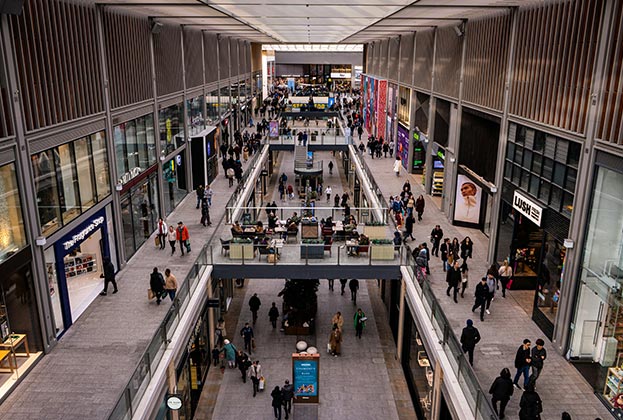

Western and Northern Europe

Western and Northern Europe face high market saturation, driving a wave of repositioning and repurposing. Many centres, particularly those once anchored by department stores, are undergoing significant transformations. While e-commerce is projected to reach 25% of total retail sales on average across Europe by 2030 (30% in the UK), prime regional schemes have seen a reduction in vacancy rates, supported by refreshed retail and leisure offerings. International brands remain pivotal in attracting visitors and creating distinctive shopping experiences.

Eastern Europe

In Eastern Europe, e-commerce remains less dominant, and is expected to account for only 10% of retail sales by 2030. Despite this, oversupply is putting pressure on locations like Poznan in Poland, where the opening of the supermall Posnania has contributed to the decline of older shopping centres like Galeria Malta. On the positive side, redevelopment opportunities are abundant, with fewer regulatory hurdles enabling projects that often address housing shortages while revitalising retail spaces.

Southern Europe

Southern Europe has experienced improved stability in shopping centres, particularly in prime locations. Adjustments to tenant mixes and an increased focus on food and beverage offerings have strengthened performance. With e-commerce growth expected to peak at 12% by 2030 across these countries, physical retail continues to play a significant role. Prime centres are benefiting from strong demand and rental growth, driven by retailers who use these spaces to showcase their omnichannel strategies.

Adapting for the future

The future of European shopping centres lies in innovation. By embracing diversification and tailoring strategies to local market conditions, operators are positioning themselves to thrive in an increasingly dynamic environment.


Further information

Contact Tom Whittington

Savills Retail


Recommended articles